
Toms River Elite Roofing repairs storm damage roofs in Toms River, NJ, serving surrounding cities including Leisure Village East, Leisure Village, Silver Ridge, Holiday City South and Beachwood. After more than 20 years of nor’easters, tropical storms and summer squalls along the shore, we know storm damage is often harder to see than it is to feel when the next rain comes through the ceiling.
Storm damage work has two parts that have to be done right: documenting the damage clearly for your own insurance claim, and repairing the roof so it stands up to the next storm better than the last. We photograph and write up what we find, and the crew will meet your insurance adjuster on site when you ask.
Before we discuss replacement, we tell you honestly whether the damage can be repaired. Many storm-damaged roofs need targeted repairs, not a new roof, and an honest assessment protects you as well as your claim.
Recognizing Storm Damage
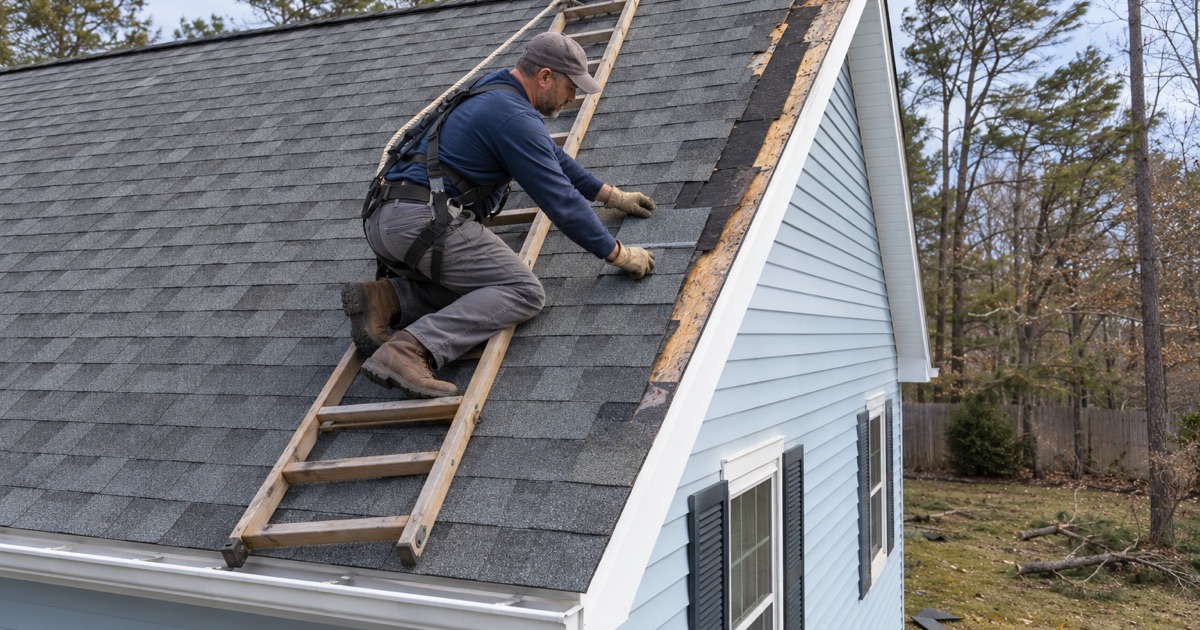
Wind Damage to Shingles
Wind lifts shingles from the edges, ridges and corners of a roof, breaking the adhesive seal and creasing the tabs as they flex. A creased shingle may fall back into place and look normal from the ground, but its mat is broken and it will tear off in a later storm. We check each slope by hand, looking for creases, missing tabs and broken seals.
Edges, rakes and ridges see the strongest uplift, so damage concentrates there. On houses raised after Sandy or standing above their neighbors, wind exposure is greater and damage can be more widespread.
Limbs, Debris and Impact Damage
Falling branches, flying debris and, occasionally, hail can puncture shingles, crack vents and dent gutters and flashing. Impact damage often shows as bruised or fractured shingles with granules knocked away. Under the shingle, the mat may be cracked even where the surface looks only scuffed.
Toms River’s tall pines drop limbs in high winds, and even a small branch can break a shingle or a skylight. After a storm, we check for punctures, dented metal and loosened flashing around any impact point.
Hidden Water Entry
Wind-driven rain can be forced under shingles and flashing that are otherwise intact. Water may not show up inside until days later, or only during the next storm from the same direction. We check the attic for fresh moisture, wet insulation and stained sheathing as part of every storm inspection.
Documenting Damage for Your Claim
Dated Photos and Written Descriptions
We photograph every damaged area, with wide shots to show location and close-ups to show the damage itself, and describe what we found in writing. The record notes the storm date you give us and distinguishes fresh damage from older wear, which is one of the most common points of disagreement in roof claims.
That documentation is yours. You can submit it with your claim, share it with a public adjuster if you hire one and keep it for your records.
Meeting the Adjuster
When you ask, we meet your insurance adjuster at the house and walk the roof together, pointing out the damage we documented. Having the person who inspected the roof present helps make sure nothing is missed. We do not negotiate the claim, since that is reserved for licensed public adjusters under New Jersey law.
Wear and Tear Versus Storm Damage
Homeowners policies generally cover sudden, accidental damage and exclude gradual deterioration. An aging roof can still have genuine storm damage, and an adjuster has to weigh one against the other. Clear evidence of fresh damage, taken soon after the storm, carries the most weight.
Insurance Rules Specific to New Jersey
The Hurricane Deductible Test
New Jersey lets insurers apply a separate, higher hurricane deductible only under narrow conditions. DOBI Bulletin 11-16 limits it to a hurricane named by the National Weather Service with sustained winds of 74 mph or more measured in New Jersey. The state has said such deductibles typically run two to five percent of a property’s insured value.
That test has excluded major storms in the past. Hurricane deductibles were not applied for Irene under Bulletin 11-16, and an executive order barred them for Sandy. Nor’easters, however damaging, do not trigger a hurricane deductible.
Storm Claims Guidance
The New Jersey Department of Banking and Insurance publishes guidance for homeowners filing storm claims, including steps to document damage and what to expect from insurers. Reading it before a storm makes the process easier when you need it.
Public Adjusters
The Public Adjusters’ Licensing Act, N.J.S.A. 17:22B, governs who may negotiate a claim for a policyholder. Be cautious of any contractor who offers to handle your claim or promises that insurance will pay for a new roof. We document damage and explain what we found, and leave the claim decisions to you and your insurer.
Repairing and Rebuilding After a Storm
Targeted Repairs
Many storm-damaged roofs need replacement of torn shingles, ridge caps and flashing in specific areas rather than a whole new roof. We repair with matching materials, hand-seal new shingles and replace any creased tabs nearby that would fail in the next storm.
When Replacement Is the Answer
Widespread damage across several slopes, combined with an older roof, can make replacement the better choice. When we recommend it, we explain why with photos, and the written scope lists every component separately. A full replacement is also an exempt capital improvement in New Jersey, documented on Form ST-8.
Building Back Stronger
A storm repair is a chance to improve the roof’s resistance. Shingles rated under ASTM D3161 Class F or ASTM D7158 Class H, installed in the manufacturer’s high-wind nailing pattern, starter strips at every edge and new drip edge all help the roof resist the next nor’easter. Near the bay and ocean, we use corrosion-resistant fasteners and flashing.
Substantial Damage on Flood-Zone Homes
FEMA’s substantial damage and substantial improvement rule, applied through local floodplain ordinances, uses a 50 percent threshold for when a damaged building in a flood zone must be brought into compliance. How a particular town counts roof work toward that threshold is a question for the local floodplain administrator, and we recommend asking before major storm repairs on a home in a flood zone.
- 20+ Years on Shore Roofs
- Line-Item Written Scopes
- Attic and Roof Leak Tracing