
Toms River Elite Roofing provides gutter installation in Toms River, NJ, serving surrounding cities including Leisure Village East, Leisure Village, Silver Ridge, Holiday City South and Beachwood. With more than 20 years working on roofs across Ocean County, we treat gutters as part of the roof system, because a gutter that overflows or pulls away undoes good roofing work below it.
We install seamless aluminum gutters and leaders formed on site to the exact length of each run, so the only joints are at corners and outlets. Every installation starts with the roof edge: the drip edge, the fascia and the pitch of the run all decide whether water ends up in the gutter or behind it.
When gutters are part of a roof replacement, they appear as their own line on the written scope, so you can see exactly what they cost and compare that figure with other estimates.
Gutters can also be installed on their own, apart from any roof work. In that case we still look at the shingle edge, drip edge and fascia first, because a new gutter hung under a failing edge will inherit its problems. If something at the roof edge needs attention, you hear about it before the gutters go up.
Seamless Gutter Installation
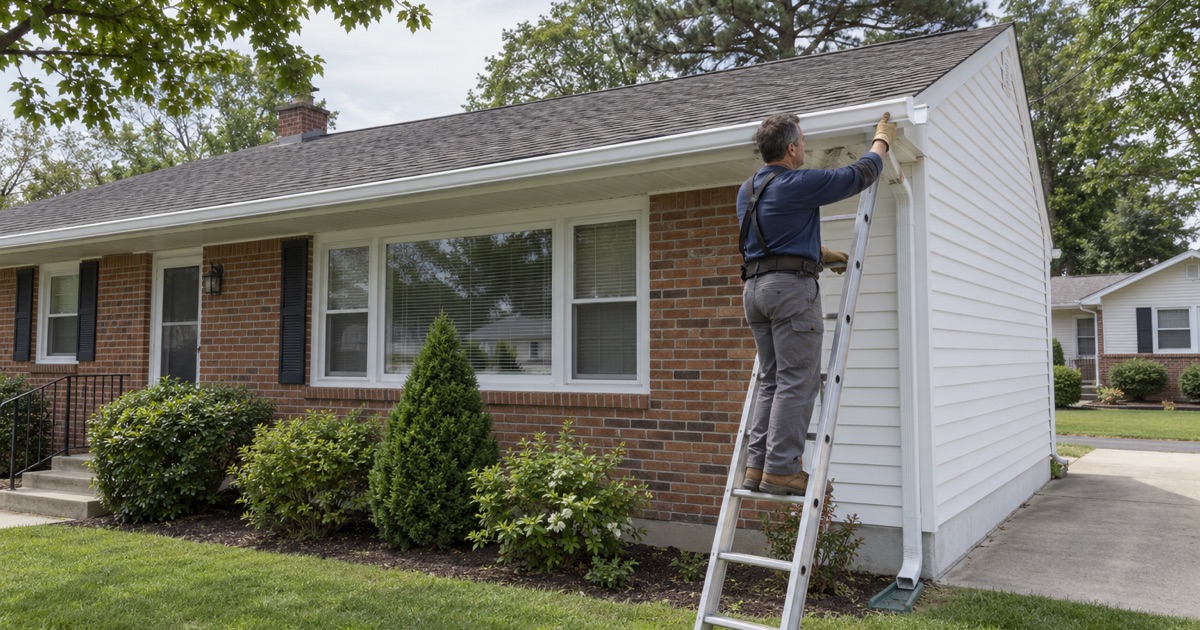
Seamless Aluminum Versus Sectional Gutters
Sectional gutters arrive in short lengths joined with connectors, and every seam is a future leak point as sealant ages. Seamless aluminum gutters are rolled from a coil on site to the length of each wall, leaving joints only at miters and downspout outlets. Fewer seams mean fewer drips and less maintenance.
Aluminum also resists rust, comes in a wide range of factory-painted colors and is light enough to hang securely on residential fascia. We match gutter and leader colors to your trim or siding so they read as part of the house.
Sizing Gutters and Leaders to the Roof
A gutter’s job depends on how much roof drains into it. Long, steep slopes and valleys that dump water at one corner can overwhelm an undersized gutter in a heavy downpour. We measure each roof plane, note where valleys concentrate flow and size the gutters and leaders to match.
Adding a leader or upsizing one is often the simplest fix for an overflowing run. On larger houses we may add outlets at both ends of a long gutter, so water does not have to travel the whole length before it can drain.
Leaders themselves come in standard and oversized profiles. Oversized leaders move more water and clog less easily with needles and leaves, which helps on houses under trees or with valleys feeding a single corner. We explain the choice and price both, so the decision is yours.
Hangers and Pitch
Gutters need a gentle slope toward each outlet so water does not stand in them. Too little pitch leaves puddles that breed debris and corrosion; too much makes the gutter visibly crooked. We snap a line along the fascia and set hidden hangers at close spacing, fastened into solid wood so the gutter holds under snow and ice.
Old spike-and-ferrule systems tend to work loose as the wood shrinks and swells. Hidden hangers with screws hold far better, and they keep the face of the gutter clean.
Gutters and the Roof Edge
Drip Edge and Fascia
Drip edge is the metal strip at the roof’s eaves and rakes that carries water off the shingles and into the gutter. Without it, water runs back along the underside of the shingles and down behind the gutter, soaking fascia boards. We install drip edge at eaves and rakes and make sure it laps into the gutter.
If the fascia is already rotted, we replace the damaged boards before hanging new gutters. Hanging a gutter on soft wood only means it will pull away again, often in the first heavy snow.
Leader Placement and Discharge
Where water leaves the leaders matters as much as how it gets there. Leaders that dump at the foundation can feed basement dampness and wash out landscaping. We plan outlet locations and extensions to move water away from the house and away from walkways, driveways and neighbors’ yards.
On houses with lower roofs below upper ones, we avoid draining an upper leader onto the lower shingles where possible, since concentrated water wears that spot quickly. Where it cannot be avoided, we add a splash guard or extend the leader to the lower gutter.
Kick-Out Flashing Where Roofs Meet Walls
Where a roof edge ends against a sidewall, kick-out flashing diverts water into the gutter instead of letting it run down the wall. Missing kick-outs are a common source of hidden rot in siding and sheathing. We install them whenever we replace gutters at those junctions.
The damage from a missing kick-out often goes unnoticed for years because it happens behind the siding. Stains below a roof-to-wall corner, swollen trim or soft spots in the wall are typical signs. When we see them, we tell you before closing anything up, so the wall can be checked and repaired properly.
Gutter Guards and Tree Debris
Choosing a Guard Type
Gutter guards come as screens, micro-mesh panels and solid covers that rely on surface tension. Each handles debris differently. Micro-mesh blocks fine debris such as pine needles and shingle granules better than coarse screens, while solid covers can shed leaves well but may overshoot in very heavy rain.
We recommend a guard based on the trees around your house and the pitch of the roof, and we install it so it does not lift the shingles or void the roof warranty.
Pine Needles and Shaded Lots
Many Toms River lots have tall pines that drop needles year-round. Needles pack into gutters and valleys, hold moisture against the shingles and feed moss on shaded slopes. On these houses, a fine-mesh guard plus attention to the valleys above the gutter keeps water moving.
We also point out branches overhanging the roof that are worth having a tree professional cut back. Fewer branches over the roof means less debris, less shade and fewer limbs falling in storms.
Maintenance With and Without Guards
Even with guards, gutters need an occasional check, especially after storms and in the fall. Without guards, cleaning once or twice a year is typical for most lots, more under heavy trees. We can inspect gutters during any roof visit and tell you whether cleaning, repairs or guards would help most.
Signs that a gutter needs attention include water spilling over the front edge in moderate rain, plants growing in the trough, stains on siding below a corner and leaders that gurgle or stay dry while the gutter overflows. Each points to a clog, a pitch problem or an undersized outlet, and each is cheaper to fix early.
Gutters for Shore, Raised and Commercial Buildings
Salt Air Near the Bay and Ocean
Close to Barnegat Bay and the ocean, salt air corrodes steel fasteners and hangers quickly. We use corrosion-resistant hangers and screws on shore houses, so the gutter system lasts as long as the aluminum itself, rather than letting go at rusted fasteners after a few seasons.
The same thinking applies to the drip edge and flashing the gutters connect to. Matching corrosion-resistant metals across the roof edge avoids one part failing early and pulling the rest down with it, and it keeps rust streaks off painted fascia and siding.
Raised Houses
On homes lifted after Sandy, gutters sit a full story higher and leaders run longer. We plan ladders and staging for the extra height and add mid-height straps on long leaders so they stay secure in wind.
Raised houses also change where water lands. A leader that once ended in a flower bed may now discharge onto a new stair landing, a parking pad under the house or a walkway that ices over in winter. We route those leaders to open ground or drainage, so water and ice stay out of the paths you use every day.
Commercial and Multifamily Buildings
Commercial and multifamily roofs drain larger areas and often combine sloped sections with low-slope roofs that feed scuppers. We size gutters and leaders for the volume, connect them properly to scuppers and coordinate with the roof membrane so water leaves the building cleanly.
For property managers, we document each run and outlet, which makes it easier to plan cleaning and spot recurring overflows before they damage the building. That record also helps when a tenant reports water at an entry, since the run feeding that spot can be identified at once.
- 20+ Years on Shore Roofs
- Line-Item Written Scopes
- Attic and Roof Leak Tracing