
Toms River Elite Roofing completes roof replacement in Toms River, NJ, serving surrounding cities including Leisure Village East, Leisure Village, Silver Ridge, Holiday City South and Beachwood. Over more than 20 years of replacing roofs on Ocean County homes, we have learned that a new roof is only as good as the parts no one sees once the shingles go on.
That is why our replacements start with a full tear-off, an inspection of the decking and a check of the attic ventilation, and why step, counter and chimney flashing are replaced rather than reused. The shingles are the visible part of the job, but flashing and airflow decide how long they last.
Before we ever talk about replacing a roof, we tell you whether a repair would do. When replacement is the right call, you get a written scope with tear-off, decking, underlayment, flashing, ventilation and gutters each on its own line, so it can be compared item by item with any other estimate.
How a Roof Replacement Runs
Preparing the Property
On the first morning, we protect shrubs, decks and air conditioning units with tarps, set a dumpster where it will not damage the driveway edge, and confirm with you where the crew should stage materials. Attic items directly under the roof deck can catch dust and nails from above, so we let you know in advance what to cover or move.
We also review the plan with you one more time: which shingle and color, where vents will go and how gutters will be handled. Small decisions made on the ground before tear-off avoid confusion once the crew is on the roof.
Tear-Off and Decking Inspection
The old shingles, underlayment and flashing come off down to the deck, one section at a time so the house is never left more open than the crew can close that day. With the deck exposed, we walk it to find soft, delaminated or rotted sheets and check for gaps and loose fasteners.
Any damaged decking is photographed and shown to you before it is replaced, at the per-sheet price written into the contract. You see the problem, approve the fix and know the cost before the new sheet goes down.
Underlayment, Flashing and Shingles
We install a self-adhering ice and water barrier meeting ASTM D1970 at eaves, valleys and around penetrations, with synthetic underlayment rated to ASTM D8257 over the rest of the deck. Drip edge goes on at eaves and rakes, and new step, counter, apron and kick-out flashing is installed wherever the roof meets a wall or chimney.
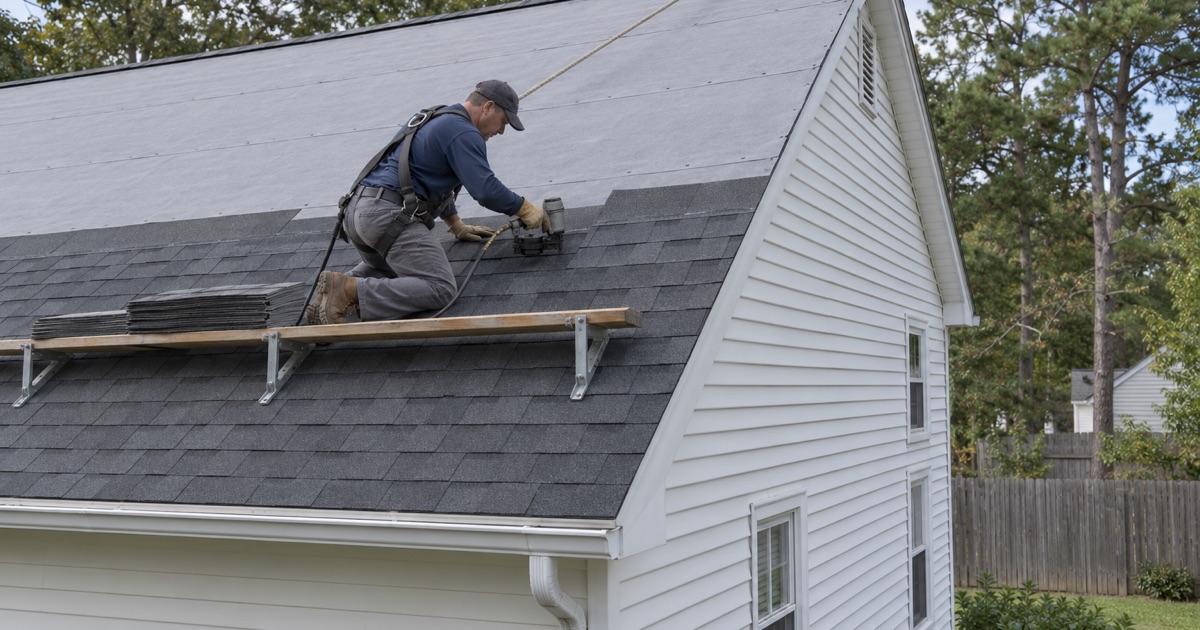
Shingles are fastened in the manufacturer’s nailing zone with the specified number of nails, starter strips are set at every edge and ridge caps are installed over the ventilation. Each of those details affects both wind performance and warranty eligibility.
Cleanup and Final Walk
At the end of each work day, we clean the driveway, yard and gutters, including a magnet sweep for roofing nails. When the roof is finished, we walk the property with you, check gutters and flower beds for debris and answer any questions about the new roof and its paperwork.
You also receive the documents that matter later: the signed contract, the shingle line and color installed, any manufacturer warranty registration and photos of the deck and flashing taken before they were covered. If you sell the house in a few years, that file answers most of a buyer’s questions about the roof.
New Jersey Rules That Shape a Replacement
Two Layers Means a Full Tear-Off
The New Jersey rehabilitation subcode, N.J.A.C. 5:23-6, requires removing the existing covering when a roof already has two or more layers, or when it is slate, wood shake or tile. Many older Toms River houses already have a second layer from an earlier re-roof, so tear-off is often required, not optional.
Even where a layover would be allowed, we rarely recommend one. It hides the decking, traps old flashing under new shingles and adds weight, and it gives up the chance to fix problems that a tear-off would reveal.
Permits and the Ordinary Maintenance Rule
Under N.J.A.C. 5:23-2.7, replacing the roof covering on a detached one- or two-family house is ordinary maintenance and needs no construction permit. You may see older town documents or competitor sites saying otherwise, but the state rule controls for detached homes.
Attached townhomes, multifamily buildings and commercial roofs are different, and so is structural work such as replacing rafters. When a job falls outside the ordinary maintenance rule, we confirm requirements with the local construction office before starting.
Contracts, Registration and Cancellation Rights
Home improvement contractors in New Jersey register with the Division of Consumer Affairs under the Contractors’ Registration Act, and their contracts must meet the state’s home improvement rules. Our contracts include the three-business-day cancellation notice, the itemized scope and the per-sheet decking price.
New Jersey has passed a contractor licensing law, but the rules that would put a roofing license into effect have not been adopted, so registration is what applies today. Before signing with any roofer, ask for the registration number and certificates of liability and workers’ compensation insurance, and read the cancellation notice.
Sales Tax and Form ST-8
The New Jersey Division of Taxation treats a new roof as an exempt capital improvement. The homeowner signs Form ST-8, and we keep it on file. That exemption applies to full replacements, not to repairs, which remain taxable, so your paperwork shows which applies.
Choosing the Right Roof for Your House
Architectural Shingles and Wind Ratings
Most Toms River replacements use architectural laminated shingles, such as GAF Timberline HDZ, Owens Corning Duration or CertainTeed Landmark. These are thicker than older three-tab shingles and carry higher wind ratings, tested under ASTM D3161 Class F or ASTM D7158 Class H depending on the product.
For homeowners who want extra protection, impact-rated shingles tested to UL 2218 Class 4 are available in several lines. We explain the differences in cost and warranty terms so you can weigh what each upgrade actually buys.
Color and Curb Appeal
Shingle color shapes how a house looks from the street more than many owners expect. We bring full-size samples and look at them against your siding, trim and brick in daylight, since small swatches in a brochure can look very different on a whole roof.
Lighter colors reflect more sun and can make a low ranch look broader, while darker blends add contrast to light siding and hide streaking from shade and pine debris. In communities with architectural standards, we check the approved color list before you fall in love with a shade the board will not allow.
Metal Roofing as an Alternative
Standing seam metal roofing is a longer-term option for some houses and works well on low-pitch porch roofs. Near the water, metal warranties often carry distance limits from surf and bays, so we check those terms against your address before recommending a product.
Metal costs more up front than shingles and needs crews who install it regularly, because panel layout, clip spacing and trim details decide whether it stays tight through decades of expansion and contraction. We quote it side by side with a shingle roof so the comparison is clear.
Replacement on Shore and Specialty Homes
Raised Houses After Sandy
Many homes near the bay were lifted after Sandy, which puts the roof a full story higher. We plan taller staging, ladders and material lifts before the crew arrives, and OSHA’s fall protection requirement at six feet on residential roofing applies to every job.
Salt Air and Corrosion-Resistant Metals
For homes near Barnegat Bay and the ocean, we choose nails, drip edge and flashing for salt exposure rather than using standard truck stock. Corroded fasteners and edge metal can fail years before the shingles, undercutting an otherwise sound roof.
Roofs Under Solar Panels
When panels are installed, their removal and reinstallation are built into the schedule with your solar company, so the array is not left in the yard and the mounts are properly flashed when it returns to the roof.
If you are thinking about adding solar in the next few years, replacing an aging roof first usually makes sense. Panels removed later for a roof replacement add a second round of labor, and a new roof under a new array lets both reach the end of their lives on a similar timeline.
Adult Communities and Condominiums
In villages and condominiums, the roof may belong to the owner or to the association. We check the governing documents before writing an estimate, so the right party signs the contract and the work fits any community standards for shingle style and color.
- 20+ Years on Shore Roofs
- Line-Item Written Scopes
- Attic and Roof Leak Tracing