
Toms River Elite Roofing provides emergency roof repair in Toms River, NJ, serving surrounding cities including Leisure Village East, Leisure Village, Silver Ridge, Holiday City South and Beachwood. In more than 20 years of storm seasons along the Jersey Shore, we have learned that the first few hours after roof damage decide how much the rest of the house suffers.
An emergency call has two goals: stop the water and preserve the evidence. We make the roof watertight with a secured tarp or temporary repair, and we photograph the damage before anything is covered, so you have a dated record for your own insurance claim.
Once the house is protected, the pressure is off. The permanent repair is then planned properly, priced in writing and scheduled for dry weather, rather than rushed in the rain where sealants and shingles cannot bond.
What to Do in the First Hour
Keep People Safe
If a tree or limb has come through the roof, move everyone out of the rooms beneath it. Stay clear of sagging ceilings, which can hold a surprising amount of water, and keep away from any downed or sagging power lines outside. Call the utility first if wires are involved.
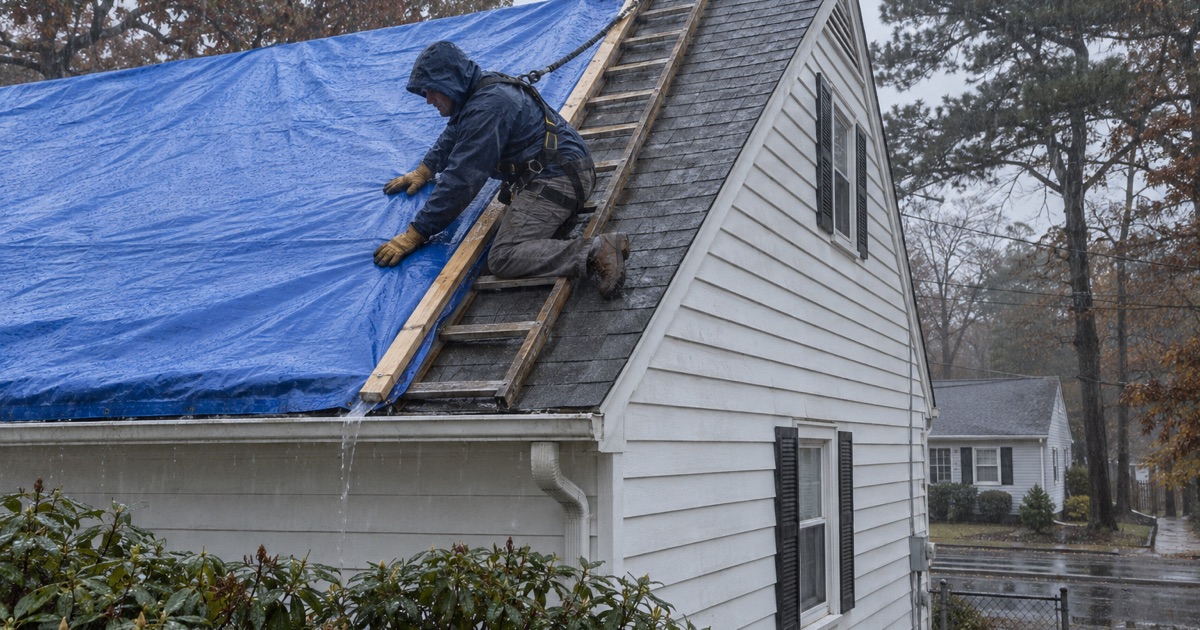
Do not go onto the roof yourself. Wet shingles, broken framing and wind make roofs dangerous after a storm, and a fall is far worse than any leak. Our crews work with fall protection and the right ladders and anchors for damaged roofs.
Contain the Water Inside
Move furniture, electronics and valuables away from the leak and put buckets or towels under the drip. If a ceiling is bulging with water, a small hole at the lowest point, with a bucket beneath it, lets the water drain in a controlled way rather than letting the drywall give way all at once.
Turn off power to rooms where water is near light fixtures or outlets if you can reach the panel safely. Then photograph the interior damage before cleaning up, since those images are part of your record.
Call Your Insurer and Document Everything
Report the damage to your insurance company as soon as you can, and write down the claim number. Keep receipts for anything you buy or pay for to prevent further damage, including tarping. We provide photos and a written description of the roof damage you can submit with your claim.
Emergency Tarping and Temporary Repairs
Securing a Tarp That Stays Put
A tarp only helps if it is still on the roof after the next gust. We size tarps to extend well past the damaged area, run them over the ridge where possible so water cannot get under the top edge and fasten them with battens rather than just weighting the corners.
The goal is to keep water out without causing more damage. We fasten through the tarp into areas that will be repaired or replaced anyway, and we avoid driving fasteners into sound shingles where we can.
Temporary Patches on Smaller Damage
Not every emergency needs a tarp. A few torn-off shingles, a lifted ridge cap or a failed pipe boot can often be patched temporarily to stop a leak until the permanent repair. We use materials that can be removed cleanly later, so the final repair is not compromised.
Photographing Before Covering
Before any tarp goes on, we photograph the damage from several angles, with close-ups of torn shingles, broken framing and impact points. Once the roof is covered, that evidence is hidden. The photos are dated and shared with you for your claim.
Fallen Trees and Limbs
Working With the Tree Crew
A large limb or tree on a roof is a job for a tree service with the equipment to lift the weight safely, especially near utility lines. We coordinate with the tree crew so the opening is covered as soon as the limb is off, rather than leaving the house exposed between visits.
Assessing Structural Damage
Once the weight is off, we inspect rafters, trusses and decking for cracks and breaks. A broken rafter needs proper structural repair, not a patch over the top, and structural work can involve the local construction office. We explain what we found and what the permanent repair involves.
Pine trees are common across Toms River, and their tall trunks and shallow roots can fail in saturated ground during a storm. After a near miss, we can point out other trees overhanging the roof that a tree professional should evaluate.
Storm Emergencies on Shore Homes
Nor’easters and Wind Damage
Nor’easters bring hours of sustained wind and sideways rain, peeling shingles from edges and ridges and driving water under flashing. Emergency calls after these storms often involve multiple small openings rather than one big hole. We check the whole roof, not just the spot that leaked first.
Raised Houses and Difficult Access
Many houses near the bay were lifted after Sandy, and their roofs now sit a full story higher. Emergency work on these homes needs taller ladders and careful anchoring, especially in wind. We plan that access as part of the response so the crew can work safely.
Hurricane Deductibles and Your Claim
New Jersey allows a separate hurricane deductible only for a hurricane named by the National Weather Service with sustained winds of 74 mph or more measured in New Jersey, under DOBI Bulletin 11-16. Many damaging storms, including nor’easters, do not meet that test. Your policy and insurer determine which deductible applies.
From Emergency to Permanent Repair
Repair or Replace After the Storm
Once the roof is secure and dry, we inspect it fully and give you a straight answer on whether a repair will restore it or whether the damage and the roof’s age point toward replacement. Either way, the estimate is written with each item on its own line.
Meeting the Adjuster
If you ask, we will meet your insurance adjuster on site and walk the roof together, pointing out the damage we documented. Negotiating the claim itself is the work of a licensed public adjuster in New Jersey, so we stick to documenting the roof and explaining what we found.
Scheduling the Lasting Repair
Permanent repairs need dry conditions so underlayment, sealant strips and flashing bond properly. We schedule them as soon as the weather and your claim allow, remove the temporary materials and leave the house with a repair built to last.
- 20+ Years on Shore Roofs
- Line-Item Written Scopes
- Attic and Roof Leak Tracing